The Challenge
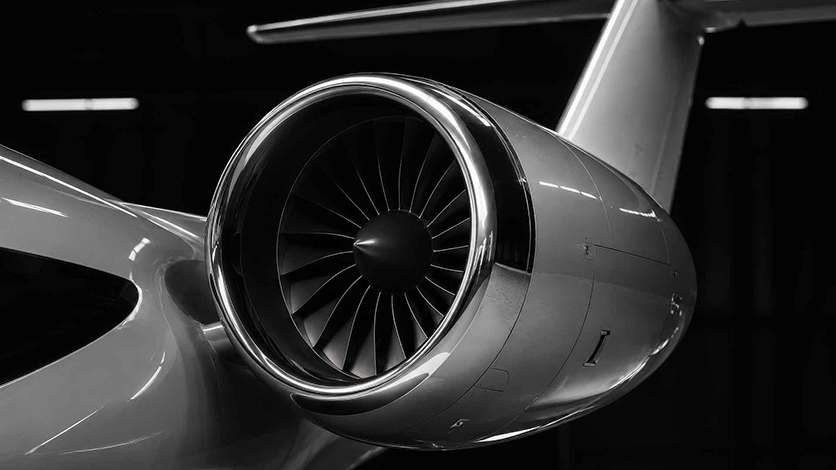
Otto Aerospace is building the Phantom 3500, a super-midsize business jet designed around transonic super-laminar flow. Its teardrop fuselage and wide-chord wing hold airflow smooth and cut drag enough that Otto targets a fuel burn near 115 gallons an hour, against roughly 300 for comparable jets. Wind-tunnel results that CEO Paul Touw said “surprised even us” point to the aerodynamic gains the program is chasing.
Ambition on that scale creates a cost problem with no easy answer. A clean-sheet, transonic super-laminar airframe has no legacy aircraft to price against, yet most of a program’s lifetime cost is fixed by design choices made before parts exist. Otto also must price and build under real economic pressure, with persistent supply-chain constraints and a sustainable-aerospace mandate that leave no room for cost discovered too late.
What Otto Needed
Otto needed cost intelligence it could act on from the earliest design stages, not estimates that arrive after the design hardens. For Obi K. Ndu, PhD, Otto’s chief information and digital officer, “time-to-market, quality control, and resource accuracy are critical to [Otto’s] success.” The company needed parametric estimates it could defend to investors and partners, update as the design evolved, and turn into a price-to-win position in a market that punishes both overpricing and underpricing.
The Solution, and Why Galorath
Otto standardized on the SEER platform, built to estimate exactly what has never been built before. SEER for Manufacturing produces manufacturing and assembly cost estimates with predictive analytics, risk analysis, and labor, resource, and material modeling, while SEER-3D generates cost directly from any CAD system, letting Otto re-estimate as designs change and weigh cost-saving alternatives in the same cycle it designs them. On top of both, the SEERai layer adds natural-language interaction and embedded guidance that shorten the path from question to answer.
The difference Otto bought is estimating that works without a build history. SEER draws parametric estimates and risk profiles from Otto’s proprietary data blended with Galorath’s historical aerospace data, an approach that also simplifies work breakdown structure generation. The same platform is relied on by NASA, Boeing, the U.S. Department of Defense, BAE Systems, and Accenture, a record that carries weight when estimates must hold up in front of program partners and government sponsors. As Galorath chief strategy officer Charles Orlando frames the problem, “Delivering sustainable flight innovation demands precision, flexibility, and rigorous control.”
Results and Expected Results
The Phantom 3500 is still in development, so the payoff is not yet quantified, but the direction is set. Otto now prices design concepts before parts exist, runs design-to-cost trade studies while changes are still cheap, and holds one estimating baseline from concept through production. Ndu describes the platform as “keeping us ahead of the curve with a strategic advantage.” For Otto, that converts cost from a figure discovered at the end of development into a lever managed from the start, which is the foundation of any price-to-win strategy.
At a Glance
- Customer: Otto Aerospace (Long Beach, California), developer of transonic super-laminar (TSL) sustainable aircraft
- Program: Phantom 3500 super-midsize business jet (unveiled 2023 as the Celera 800); selected for the DARPA-led, OECIF-resourced Energy Web Aircraft program
- Solution: SEER, standardized across the program (SEER for Manufacturing, SEER-3D, SEERai)
- Challenge: clean-sheet TSL airframe with no legacy cost history to price against, under economic and supply-chain pressure and a sustainable-aerospace and price-to-win mandate
- What Otto needed: early, defensible parametric cost and risk estimates that update as the design moves, protecting time-to-market, quality control, and resource accuracy
- How SEER and SEERai are used: parametric estimates and risk profiles from proprietary plus Galorath historical aerospace data; CAD-linked costing (SEER-3D) that re-estimates as designs change; simplified work breakdown structure generation; SEERai for natural-language interaction and guidance
- Results and expected results: cost visibility from the first design stages, design-to-cost trade studies, one baseline from concept to production, and a price-to-win footing.
Sources: Galorath press release (3 June 2025); TWZ reporting on the Phantom 3500.
Share this: