
10-Step Estimation Process Checklist
View our 10 Step Estimating Process Checklist. This checklist should be tuned to the individual company’s needs and suggestions.
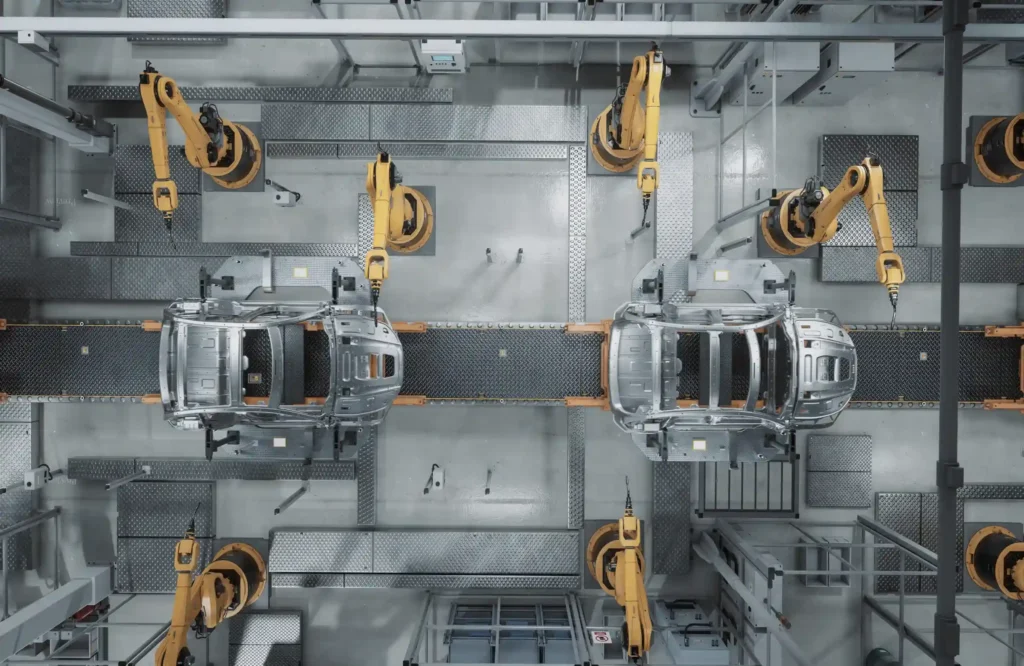
$65 billion. That is the collective writedown automakers have absorbed from EV investments built on cost projections that did not survive contact with reality. The estimation failures behind these losses are not unique to automotive. They are a warning for any industry scaling new technology on old assumptions.
Ford has written off $19.5 billion. General Motors took $7.6 billion in charges for 2025 alone, with more expected this year. Stellantis recorded a staggering €22.2 billion writedown in the second half of 2025, reflecting what the company described as significantly reduced expectations for EV products. Across the industry, more than $65 billion in financial writedowns now mark what was, just three years ago, a confident race to build EV factories and capture market share.
These are not operational losses from selling cars at a loss. They are asset impairments, meaning the projected value of the investments no longer holds. The cost models that justified billions in capital allocation were built on demand curves, material cost assumptions, and production ramp timelines that proved wrong at nearly every level.
Battery costs remain the dominant variable, accounting for 40%-50% of total EV manufacturing expenses. While pack prices fell to a record $108 per kWh globally, the averages mask severe regional disparities. Packs in North America and Europe run 44% and 56% higher than in China, respectively. Automakers who modeled battery costs using global averages rather than region-specific supply chain realities built estimates on a foundation that was never accurate for their production footprint.
Raw material volatility compounded the problem. Lithium prices have seen an 800% spread over the past decade, while cobalt prices have fluctuated by nearly 300%. A 10% swing in raw material costs typically shifts battery pack prices by 5 to 7%, yet many capital allocation models used static material cost inputs or best-case trajectory curves. Labor cost escalation added another layer: union negotiations are driving 25%-30% increases in manufacturing labor costs, a variable that traditional Excel-based costing models, updated infrequently, consistently underestimate.
The EV writedown story is often framed as a demand forecasting failure or a strategic miscalculation. It is both. But at its core, it is an estimation failure: the inability of static, assumption-heavy cost models to account for the volatility, interdependency, and regional variability inherent in scaling new technology.
The upshot: Any automaker investing in AI infrastructure, advanced manufacturing, energy transition, or digital transformation faces the same structural challenge: the cost models that justify capital allocation must be dynamic, account for second-order effects like labor market competition and supply chain repricing, and be stress-tested against scenarios that the business case would prefer to ignore. $65 billion says the old way of estimating does not work. The question is whether your industry applies learnings from the automakers mistakes, becomes a cautionary tale.
10-Step Estimation Process Checklist
View our 10 Step Estimating Process Checklist. This checklist should be tuned to the individual company’s needs and suggestions.

Estimating Total Cost of Ownership (TCO)
Find out how you can use Total Cost of Ownership (TCO) model to create an estimate which includes all the costs generated over the useful life of a given application.

Should Cost Analysis
Learn how Should-Cost Analysis can identify savings opportunities and drive cost efficiency in procurement and manufacturing processes.

ROM Estimate: The First Step Towards a Detailed Project Plan
Find out what ROM (rough order of magnitude) estimate is and why is it a crucial element of every project planning cycle.

Software Maintenance Cost
Find out why accurate estimation of software maintenance costs is critical to proper project management, and how it can make up to roughly 75% of the TCO.

 Add Galorath as a preferred source on Google

Share this:


Get access to news
Sign up to get relevant news in your inbox - never miss it!