
10-Step Estimation Process Checklist
View our 10 Step Estimating Process Checklist. This checklist should be tuned to the individual company’s needs and suggestions.
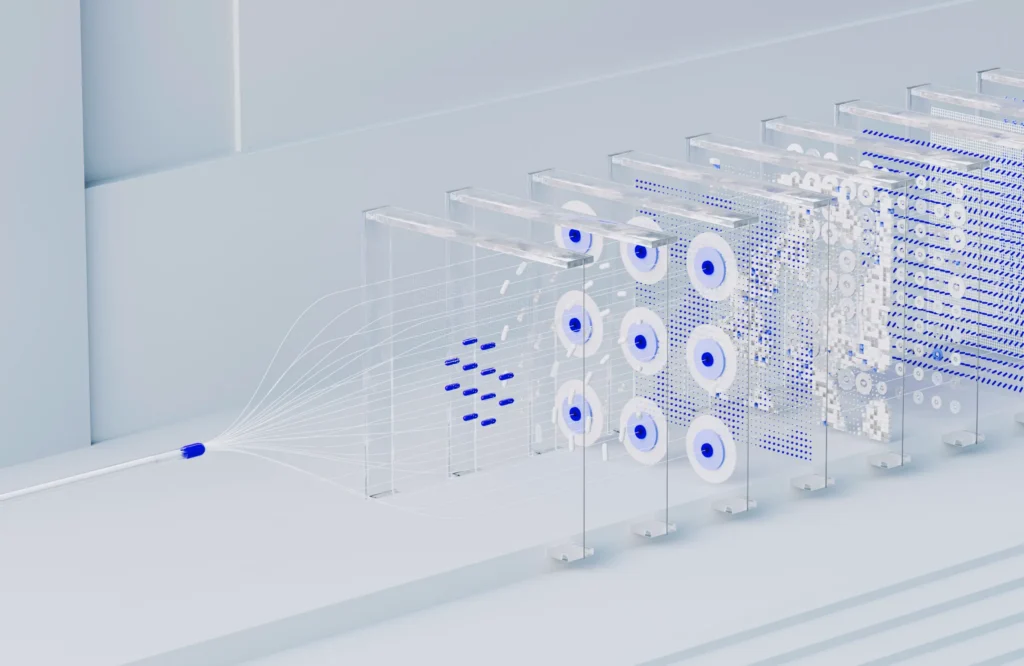
A single compromised AI agent can spread across a network of up to a million others. That finding, reported by Defense One, arrives in the middle of a defense AI gold rush, and it exposes a cost risk that almost no program baseline has tried to bound.
A single compromised AI agent can propagate across a network of up to a million interacting agents. That result, reported by Defense One from controlled experiments, lands in the middle of a defense AI gold rush. Officials describe agentic tools compressing two weeks of work into three hours, and users have already built more than 100,000 agents on the GenAI.mil platform. The autonomy that compresses the work also widens the radius of a single failure. Most coverage treats this as a cybersecurity problem, but the sharper implications land in cost estimation, where almost no one is pricing what these agents might do.
Cost estimation is the disciplined management of uncertainty. Estimators do not claim to know the future precisely. They bound it, assigning ranges, confidence levels, and drivers that can be modeled and defended, and the whole practice rests on the premise that the relevant risks can be described well enough to be bounded at all. Agentic AI puts pressure on that premise in a way few baselines account for. Autonomous agents that call other agents, trigger actions, and rewrite their own workflows produce correlated, emergent risk that a conventional register, built around independent and cataloged failures, was never designed to hold. Picture a single failure cascading across a million agents at once. When the downside has no boundary, a single-point estimate becomes an act of optimism with no analytic support beneath it.
The honest question for any program embracing agentic AI concerns the shape of the cost distribution when an agent network behaves in a way no one modeled. Most baselines have no answer, because that risk was never bounded to begin with.
Speed and security draw the attention, yet a quieter issue strikes estimation more directly. When agents begin touching budget justifications, should-cost analyses, and bid models, the output of an ungoverned agent carries no provenance. It cannot say which data it relied on, which assumptions it made, or how to reproduce its result. An estimate that cannot be reconstructed cannot be defended, and a fleet of autonomous agents generating indefensible numbers at machine speed multiplies that exposure faster than any review team could catch.
Galorath’s 2026 State of the Industry report shows the discipline is not ready for this. Among organizations using AI, only 28.6% have applied it to decision support for cost, schedule, or risk, while the bulk of deployments still handle document drafting and data preparation. The judgment-intensive work that actually drives estimation accuracy remains the least automated, and that is the precise territory agentic tools are now rushing toward.
The instinct to slow down misreads the moment, since the speed is too valuable to surrender. The work ahead is to capture agentic productivity without inheriting an unbounded attack surface, and that is a question of architecture. Galorath designed SEERai around exactly that question. As the Estimation-Centric AI layer of the SEER platform, SEERai is agentic by design, with specialized agents that handle bounded tasks across intake, modeling, and review. Its agents generate work breakdown structures, extract parameters from source documents, assemble baseline cost, schedule, and risk ranges, and compile RFP responses. Those agents operate inside a contained environment with isolated tenant boundaries, deployable on-premises, in a private cloud, or air-gapped, with no open mesh of a million nodes for a compromised agent to traverse. That containment is what keeps the speed of these agents from turning into a propagation path.
Provenance is built into the same design. Drawing on the SEER modeling core, SEERai grounds its reasoning in validated historical and operational data, so its agents cannot manufacture a confident figure from undisclosed sources. Every action is logged, every output traces to verified inputs, and a human reviewer stays in control of the result. Galorath frames this approach as Estimation-Centric AI, defined by task specialization, data control, explainability, human oversight, and secure integration. The effect is to keep the part of agentic AI worth having, the compression of weeks into hours, while removing the conditions that leave its risk impossible to price.
The State of the Industry report draws a sharp line between organizations that commit to governed AI and those that dabble. Among the 107 organizations actively increasing their AI investment, 51% reported real gains in planning accuracy and estimation confidence. Among the 67 taking a cautious approach, only 11.1% saw the same. The report credits that gain to a specific combination: AI deployed alongside governance, connected systems, and process redesign.
The defense community is about to spend years and considerable resources learning which of its agentic deployments stayed contained under pressure. That discovery does not have to happen in production. It can happen earlier, inside the estimate, where the cost of an unbounded agent network is modeled as a risk range before a program commits to it. More than 100,000 agents stood up in a matter of months. The harder question is whether anyone can place a credible price on what they might do, and that price exists only when the agents are governed, grounded in traceable data, and held under human review. Bound the risk, and it can be priced.
10-Step Estimation Process Checklist
View our 10 Step Estimating Process Checklist. This checklist should be tuned to the individual company’s needs and suggestions.

Estimating Total Cost of Ownership (TCO)
Find out how you can use Total Cost of Ownership (TCO) model to create an estimate which includes all the costs generated over the useful life of a given application.

Should Cost Analysis
Learn how Should-Cost Analysis can identify savings opportunities and drive cost efficiency in procurement and manufacturing processes.
ROM Estimate: The First Step Towards a Detailed Project Plan
Find out what ROM (rough order of magnitude) estimate is and why is it a crucial element of every project planning cycle.
Software Maintenance Cost
Find out why accurate estimation of software maintenance costs is critical to proper project management, and how it can make up to roughly 75% of the TCO.

 Add Galorath as a preferred source on Google

Share this:


Get access to news
Sign up to get relevant news in your inbox - never miss it!